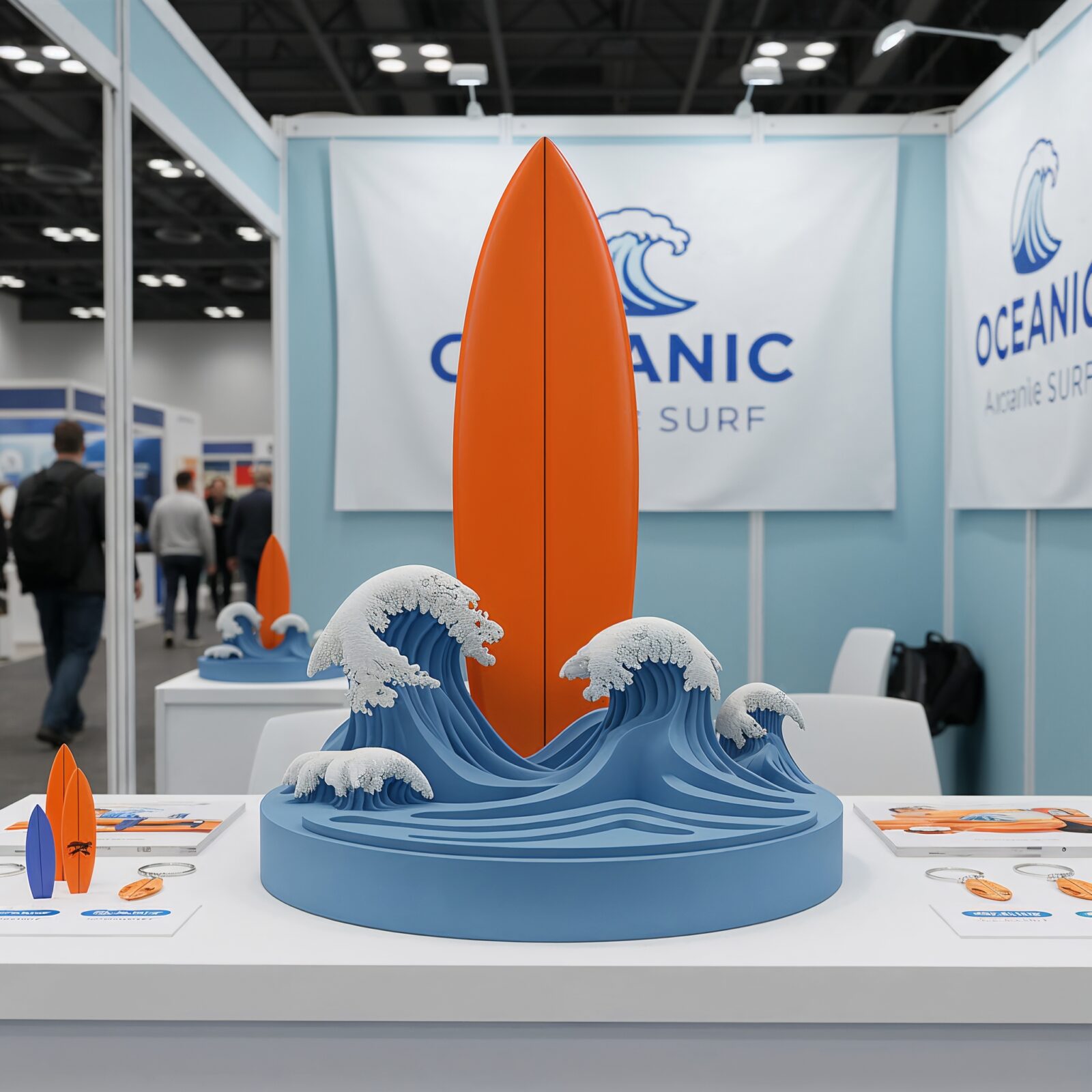
Trade shows, events, and pop-up setups move fast.
A business usually has limited space, limited time, and only a short window to make the setup look polished and easy to understand. In that kind of environment, display details matter more than people expect.
It is not just about having products on a table. It is about how those products are presented, how clearly the space communicates, and how easily visitors can understand what the business offers.
That is why custom trade show display pieces can be so useful.
They help businesses create setups that feel more intentional, more organized, and better suited to the actual event environment.
Temporary setups still need to feel professional
One of the biggest challenges with event spaces is that they are temporary.
A booth, table, or pop-up area may only exist for a few hours or a few days. Because of that, businesses sometimes rely on whatever generic display products are easiest to bring along.
That can work at a basic level, but it often creates a setup that feels improvised.
Mismatched stands, awkward signage, unstable risers, and display pieces that do not fit the products well can make the whole space look less polished than it should. Visitors may not consciously analyze those details, but they notice the difference.
Custom trade show display pieces help close that gap. They give a temporary setup a more finished and intentional look.
They help products stand out in busy environments
Trade shows and events are crowded with visual competition.
Visitors are seeing multiple booths, signs, samples, and product tables in a short amount of time. If a product display is flat, cluttered, or unclear, people may pass by without really engaging.
Custom display pieces can help solve that by improving:
- height and layering
- spacing
- visibility
- product grouping
- viewing angles
This matters because even small improvements in presentation can make a booth easier to scan and easier to remember.
A product that is elevated, framed well, or supported by a better-fitting display piece usually has a better chance of being noticed.
They make small event spaces work harder
Most event setups are working with tight physical limits.
A business may have a table, a compact booth footprint, or a narrow pop-up area that has to communicate a lot in a small amount of space. Generic display pieces do not always help with that. In some cases, they make the setup feel more crowded or waste valuable surface area.
Custom trade show display pieces can be designed around the exact space available.
That can help businesses create:
- compact product risers
- better tabletop organization
- cleaner sign placement
- sample displays that fit the booth footprint
- display components that support both presentation and workflow
When the pieces are sized around the real setup, the space usually feels more deliberate and easier to navigate.
They support clearer messaging
At an event, a display does more than hold products. It helps communicate.
Visitors often need to understand, very quickly:
- what the business offers
- what the product is
- what makes it interesting
- what to do next
If the display setup is visually messy or poorly organized, that message gets weaker.
Custom display pieces can support clearer communication by making room for better product grouping, cleaner signage, and more logical flow within the setup. That can be especially useful when a business has multiple products, samples, finishes, or options to show in one small area.
The goal is not to overdesign the space. The goal is to make it easier for someone walking by to understand what they are looking at.
They can improve setup consistency from event to event
Businesses that attend multiple events often run into the same problem: every setup feels slightly different.
That inconsistency can make the brand presentation weaker and can also create practical issues during setup and teardown. Teams end up improvising placement, adjusting generic stands, or rebuilding the table layout each time.
Custom trade show display pieces can help create a more repeatable system.
When a business has display components designed around its real products and typical event needs, it becomes easier to recreate a cleaner setup across multiple shows, markets, and pop-up appearances.
That consistency can save time and make the booth feel more professional each time it is used.
Better fit can also mean better durability and usability
Event setups are not static.
Display pieces get packed, moved, unpacked, repositioned, and handled throughout the event cycle. A generic piece may work for one event, but not hold up especially well over repeated use or awkward transport.
Custom display pieces can be designed with that real-world handling in mind. They can be made to support the actual products being shown, the space they need to fit, and the way the business expects to use them over time.
That can lead to a setup that is not only better looking, but also easier to manage from one event to the next.
Common uses for custom event display pieces
Businesses often benefit from custom trade show display pieces when they need:
- tabletop product displays
- risers for featured items
- branded display supports
- sample presentation pieces
- compact signage holders
- display components for pop-up retail setups
- custom pieces that help organize products within a booth
These are practical needs, not unusual ones. In many event settings, the difference between a basic setup and a strong setup comes down to how well those display details are handled.
Final Thoughts
At trade shows, events, and pop-up setups, businesses do not get much time to make an impression.
That is why presentation matters. Custom trade show display pieces can help products stand out, make small spaces work better, improve organization, and give the setup a more polished and consistent feel.
They are not just decorative extras. In the right setup, they are part of what makes the booth easier to understand and more effective to use.
If you are planning custom trade show display pieces for an upcoming event, Plastika3D can help create display components that fit the products, the space, and the practical demands of temporary event setups.